Minimum Bouldering x G2G Textiles: Custom Competition Kit for Climbing Academy Zürich

When Minimum — one of Zürich's most established bouldering gyms — needed custom kits for their Climbing Academy Zürich competition team, the brief was clear: functional performance wear that carried the club's identity with confidence, not something that looked like a generic sports order.
This case study shows how we developed their competition kit from concept to delivery — combining screen printing and embroidery on high-performance synthetic fabric within a 12-week production timeline.
Project Snapshot
- Client: Minimum Bouldering / Climbing Academy Zürich
- Product: Custom Competition Kit — Performance T-Shirt
- Category: Custom Sportswear Production
- Quantity: 90 pieces
- Techniques: Screen printing, embroidery
- Production: China
- Sampling: 2–3 weeks
- Production run: 5–6 weeks
- Total timeline: 12 weeks from development to delivery
- Scope: Product development, sampling, manufacturing
The Brief
Minimum has built a strong community around bouldering in Zürich — with a dedicated youth competition programme running under the Climbing Academy Zürich name. Follow them on Instagram (@minimumbouldering) to see the level these athletes compete at.
For their competition team, kit is more than just clothing. It's the visual identity athletes wear on the wall in front of judges, competitors and spectators. It needs to look sharp, move well under pressure and hold up across an entire competition season.
The core requirements were clear:
- Black performance t-shirt with pink accent detailing — matching the Minimum brand palette
- Screen printing for the graphic and colour work across the garment
- Embroidered chest logo for depth and durability
- High-performance synthetic fabric with strong airflow for active climbing use
- Youth and adult sizing across a mixed-age competition squad
- 90 pieces delivered competition-ready within a tight seasonal window
Key Challenge
The main challenge was producing a garment that worked equally well across a wide size range — from younger youth athletes to adults — while maintaining consistent colour accuracy, print quality and fit proportions across all sizes.
Screen printing on synthetic performance fabric requires precise colour profiling. The vivid pink accent details and graphic work had to be sharp and consistent whether the garment was a youth XS or an adult XL. Any colour shift or registration issue would be immediately visible when the team lined up together.
At 90 pieces, the order also needed careful planning across size distribution — ensuring the production run covered the squad's full size range without creating surplus in any single size.
The Production Process
1. Fabric Selection
The garment was produced in a lightweight, high-performance synthetic fabric engineered for athletic movement. The construction prioritises airflow and moisture management — essential for a sport where athletes generate significant body heat during intense bouldering sessions.
The fabric also needed to hold print ink cleanly across large printed areas without losing colour vibrancy after repeated washing — a non-negotiable for competition wear used across a full season.
2. Sampling — 2 to 3 Weeks
Before committing to full production, we completed a sampling round over approximately 2 to 3 weeks. This stage allowed Minimum to review fit across the size range, confirm colour accuracy against their brand references and approve the graphic placement before the full run was cut.
Getting this stage right was particularly important given the mixed sizing requirements — small adjustments to proportions at the sample stage prevent larger issues across a 90-piece run.
3. Screen Printing — Graphics and Accent Details
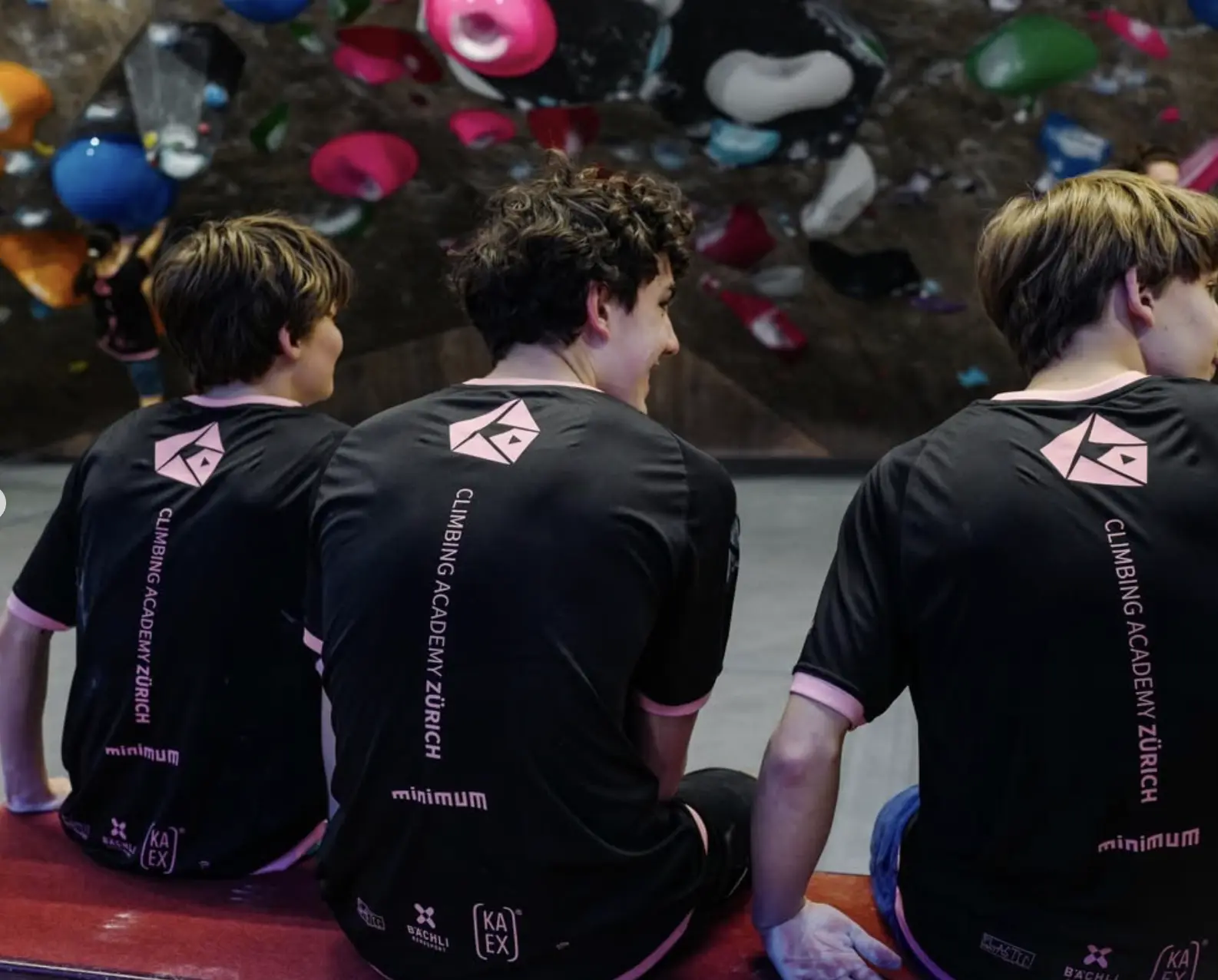
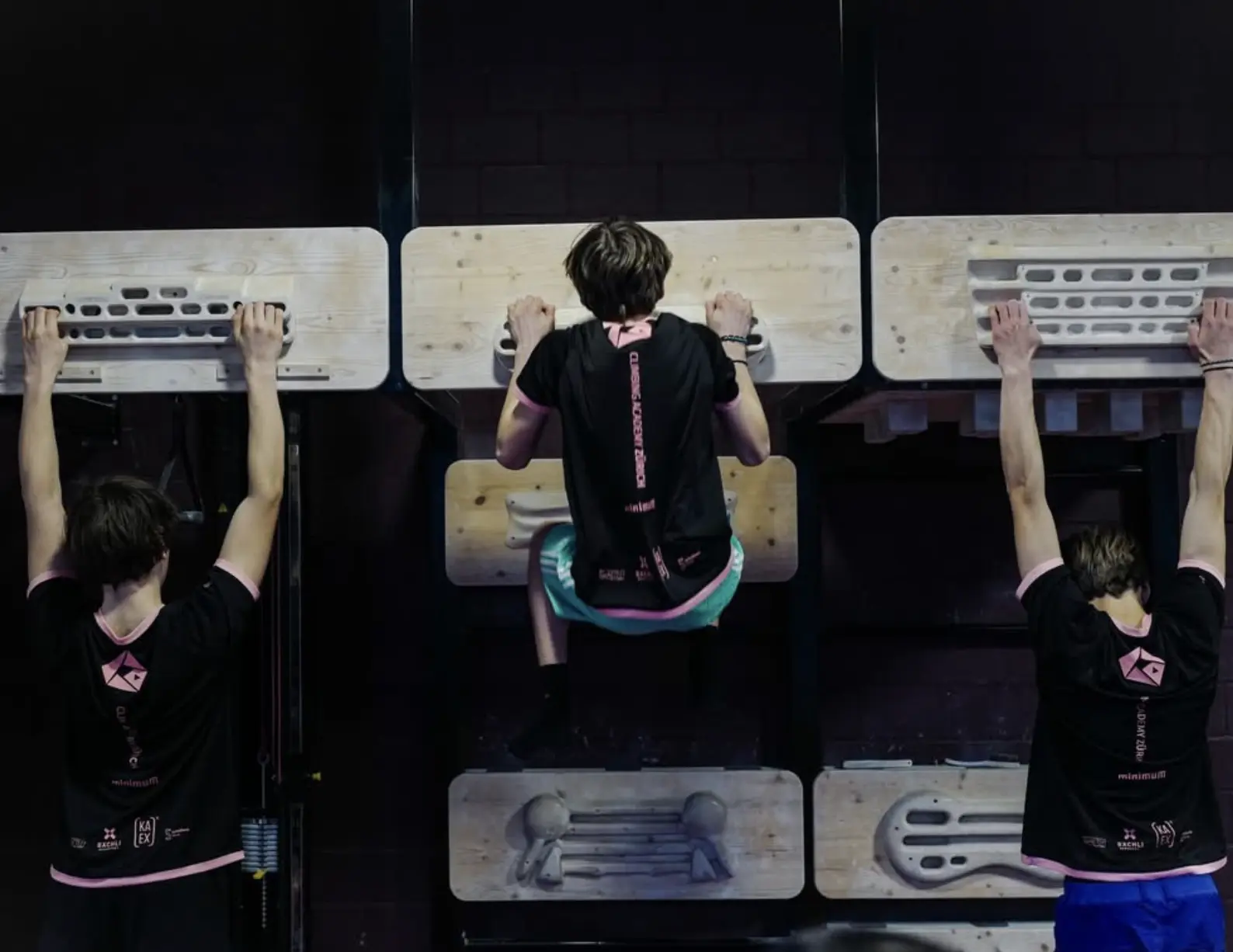
The bold graphic work — including the pink vertical stripe detailing, sleeve accents and back typography — was executed through screen printing directly onto the performance fabric.
This method delivered sharp edge definition on the geometric elements and consistent colour saturation across the full production run, with the pink tones remaining vibrant against the deep black base fabric.
4. Embroidery — Chest Logo
The Minimum diamond logo on the chest was applied through embroidery — adding a tactile, dimensional quality that print alone cannot achieve. On a performance garment where the fabric surface is smooth and lightweight, the embroidered logo creates a clear focal point and communicates a higher level of finish.
Precision digitising ensured consistent stitch density and clean edges across all 90 pieces, with the logo sitting flat and sharp regardless of the garment size.
The Result
The finished competition kit was delivered across the full squad — youth and adult athletes — within the 12-week production window, ready for the competition season. Sampling took 2 to 3 weeks, with the production run completed in 5 to 6 weeks.
The combination of screen printing and embroidery on performance synthetic fabric achieved exactly what Minimum needed: a garment that looks unified and considered when the team competes together, and performs well under the physical demands of competitive bouldering.
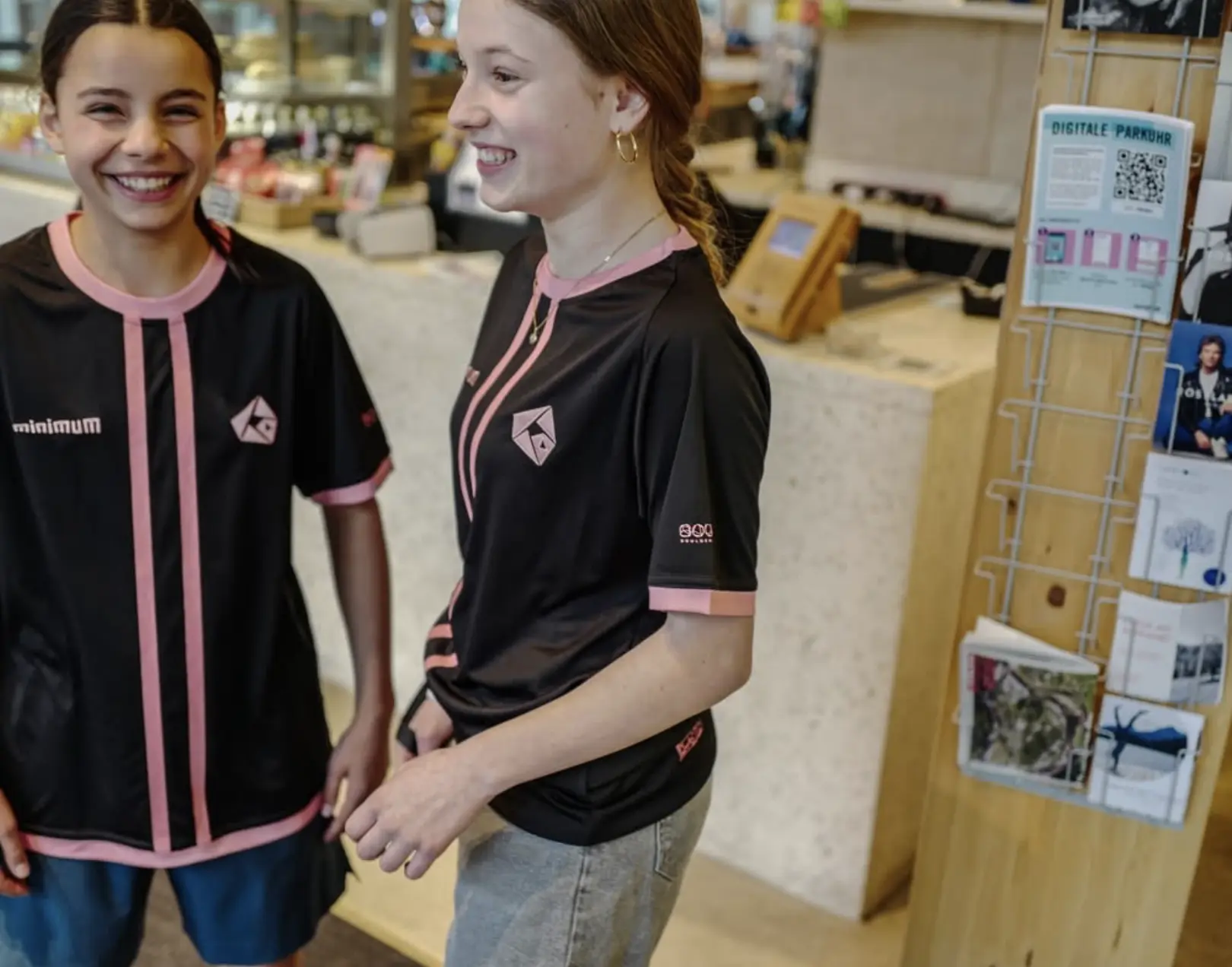
You can see the kit in action on the G2G Textiles Instagram and follow @minimumbouldering to see how the Climbing Academy Zürich team performs wearing them.
What This Project Demonstrates
- Performance fabric and decoration techniques are not mutually exclusive — screen printing and embroidery both work cleanly on synthetic sportswear when the production process is set up correctly.
- Sampling across a mixed size range is essential — small fit and proportion decisions at sample stage have a large impact across a full production run.
- Kit creates team identity — a unified, well-produced garment changes how a squad presents itself at competition level.
- China production delivers at this volume — 90 pieces with a custom spec, mixed sizing and a 12-week window is exactly the kind of order where quality Chinese manufacturing makes sense.
Looking to Kit Out Your Team or Club?
Whether you're outfitting a competition squad, a sports club or a corporate team, the process is the same: clear brief, proper sampling, right production route for your volume and timeline.
If you want to see another example of how custom garment development works — this time for a fashion brand rather than a sports club — take a look at our Bloc Magasin case study.
Ready to kit out your team?
Tell us about your project — our quote wizard takes three minutes and gives us everything we need to come back with accurate pricing and a realistic timeline.