MOQs Explained: What Minimum Order Quantities Mean and How to Work With Them
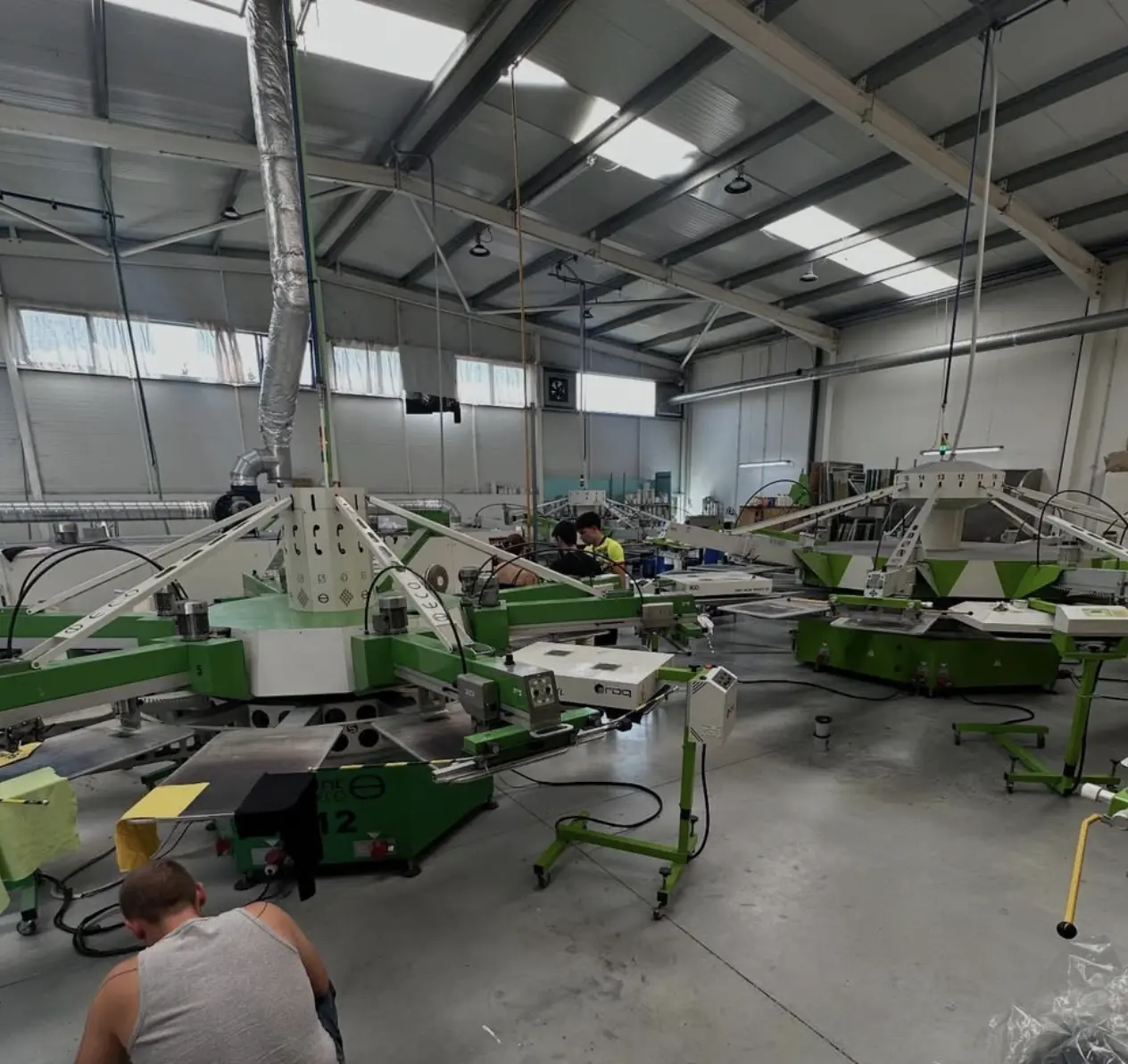
MOQ — minimum order quantity — is one of the first terms you'll encounter when sourcing custom clothing. It's also one of the most misunderstood. Some brands treat it as a hard barrier. Others don't factor it in at all until they're already deep in a conversation with a manufacturer.
This guide explains what MOQs actually are, why they exist, how they vary across the industry — and how to work with them practically, whether you're ordering for the first time or scaling an existing line.
MOQs at a Glance — Industry vs G2G
| Product Type | Industry Average MOQ | G2G Textiles MOQ |
|---|---|---|
| T-Shirts | 100–300 pieces | From 75 pieces |
| Hoodies / Sweats | 100–300 pieces | From 75 pieces |
| Sports Kits | 50–150 pieces | From 75 pieces |
| Jackets / Outerwear | 150–500 pieces | From 75 pieces |
| Custom Workwear | 100–300 pieces | From 75 pieces |
| Caps | 100–500 pieces | From 50 pieces |
| Socks | 200–500 pieces | From 100 pieces |
| Woven Keychains | 500+ pieces | From 250 pieces |
Industry MOQs vary significantly depending on the factory, the production country and the complexity of the garment. The numbers above reflect typical minimums for custom-spec production — not blank + print, which often has lower thresholds.
Why MOQs Exist
MOQs aren't arbitrary. They exist because custom garment production has fixed costs that don't scale down proportionally with order size.
Every order — regardless of quantity — requires pattern making, fabric sourcing, machinery setup, decoration preparation (screen setup, embroidery digitising) and quality control. A factory running 75 pieces incurs most of the same setup costs as one running 500. The difference is that those fixed costs are spread across fewer units at lower quantities, which pushes the per-piece cost up significantly.
MOQs are essentially the point at which a manufacturer can produce your order and still run a viable operation. Below that threshold, the economics simply don't work — for them or, ultimately, for you.
How MOQs Are Calculated
Most manufacturers set MOQs based on a combination of three factors:
- Fabric minimums — mills typically sell fabric in minimum roll lengths. If your order doesn't use a full roll, you're either paying for unused fabric or the manufacturer is absorbing that cost.
- Setup costs — screen printing setups, embroidery digitising files and cut-and-sew patterns all carry one-time costs that need to be amortised across the production run.
- Production efficiency — factories run more efficiently at higher volumes. Below a certain quantity, the time cost of setting up a production line outweighs the output.
Understanding this helps you negotiate more effectively — and helps you understand why a manufacturer quoting 300 pieces minimum isn't necessarily being inflexible. They're reflecting real production economics.
MOQs Per Style vs Per Order
This is a distinction that trips up a lot of first-time buyers. MOQ typically applies per style — meaning per individual product specification. A tee in black and a tee in white are two styles. A hoodie and a tee are two styles. Each style usually needs to hit the MOQ independently.
This matters because it affects how you structure your range. Spreading a 100-piece order across four styles means 25 pieces per style — which falls below most MOQs and typically isn't viable. Concentrating the same budget into one or two styles at 75+ pieces each is usually the smarter approach for early-stage orders.
Size Distribution Within an MOQ
Once you hit the MOQ, how you distribute sizes within that run is up to you — but it needs to be realistic. Ordering 75 pieces split equally across XS to XXL gives you roughly 12 pieces per size, which may not reflect actual demand and leaves you with surplus in slow-moving sizes.
A more practical approach: concentrate the majority of your run in your core sizes (typically S, M, L) and add smaller quantities of edge sizes. This maximises sell-through and reduces the risk of dead stock in sizes that move slowly.
How to Work With MOQs as a Smaller Brand or Club
If you're ordering for the first time — or running a sports club, a KMU team or a startup brand — hitting a 300-piece MOQ on your first order is neither realistic nor advisable. Here's how to approach it practically:
- Work with manufacturers who offer lower MOQs — not all factories require large volumes. At G2G, most orders start from 75 pieces, with caps available from 50, socks from 100 and woven keychains from 250 — making custom production viable for clubs, growing brands and corporate teams at any stage.
- Combine styles into a single order — if you need a tee and a hoodie, ordering both together may allow the total volume to meet a combined threshold, even if neither style hits the MOQ independently. We offer this flexibility where production schedules allow.
- Start with one hero product — rather than launching a full range at low quantities, develop one product well and build from there. It's better to have 75 pieces of one excellent garment than 20 pieces each of five mediocre ones.
- Factor MOQ into your pre-order or pre-sale strategy — if you're launching a new product, running a pre-order campaign before placing your production order is a practical way to validate demand and cover your MOQ before committing to production costs.
MOQs and Price Per Piece
MOQ and unit price are directly connected. The further above the MOQ your order sits, the lower your cost per piece — because fixed setup costs are spread across more units.
| Order Quantity | Indicative Cost Impact | Notes |
|---|---|---|
| 75 pieces | Highest per-unit cost | Setup costs spread across fewer units |
| 150 pieces | Meaningful cost reduction | Most common sweet spot for growing brands |
| 200–300 pieces | Significant per-unit savings | Fabric efficiency improves at this range |
| 500+ pieces | Best per-unit pricing | Full production efficiency unlocked |
This is why it's worth thinking about your growth trajectory before placing an order. If you're confident demand exists for 200 pieces but you're nervous about the commitment, ordering 100 now and planning a reorder in 8 to 12 weeks is often more cost-effective than ordering 75 twice.
What to Ask a Manufacturer About MOQs
Before committing to a production partner, these are the questions worth asking upfront:
- Is the MOQ per style or per order? — clarifies whether you can combine products to hit the threshold
- Does MOQ change with decoration method? — embroidery and screen printing sometimes carry separate minimums for setup reasons
- Is there flexibility for repeat customers? — many manufacturers offer lower effective MOQs once a relationship is established and patterns are already developed
- Can orders be combined with other clients to reduce MOQ? — some manufacturers run consolidated production runs; worth asking if you're ordering at low volumes
- What happens to leftover fabric from my run? — relevant if you're planning a reorder, as having fabric held over can reduce costs on subsequent orders
How G2G Handles MOQs
We set our minimum at 75 pieces across most product types — tees, hoodies, sports kits, outerwear and workwear. Caps start from 50 pieces, socks from 100 pieces, and our high-quality woven keychains from 250 pieces. Those thresholds apply regardless of decoration method or production complexity.
For brands or clubs that need multiple styles but can't hit the minimum on each independently, we offer the option to combine styles within a single order where production schedules allow. It's worth discussing this upfront when you submit your brief — our quote wizard has space to outline your full requirements so we can assess the best approach from the start.
If you want to see how this works in practice, our Minimum Bouldering case study covers a 90-piece competition kit order — and our Bloc Magasin case study shows how a small-run fashion order works from development through to delivery. Follow us on Instagram (@g2g_textiles) for more production examples and behind-the-scenes content.
Not sure if your volumes work?
Tell us what you're planning — our quote wizard takes three minutes and we'll come back with honest advice on whether your order is viable and what it's likely to cost.